


Tea and the British
There was a time in the late 20th century when some people believed that coffee would replace tea as Britain’s favorite .
In the event, that has not happened, and today, tea remains firmly anchored as Britain’s favorite drink, accounting for over two fifths of all the drink consumed in Britain with the exception of water.
To say that the British are fond of tea is something of an understatement. From the Royal Family down to the humblest of the homeless and the out-of-work, tea is more than just a ; it is an essential part of life! It is one of those things that dis- tinguishes life in Britain from life anywhere else. The average Briton over the age of
drinks two and a half cups of tea per day, over cups per year – mostly tea with milk in it — which makes Britain one of the leaders in the international league of tea-drinking nations! Only the Irish and the Turks drink more tea than the Brit- ish; in Europe, the nearest rival to Britain is Russia, where people only consume about
cups of tea per year.
In _______, during the Covid lockdowns, tea consumption in Britain went up by 50%, as more people stayed at home all day.
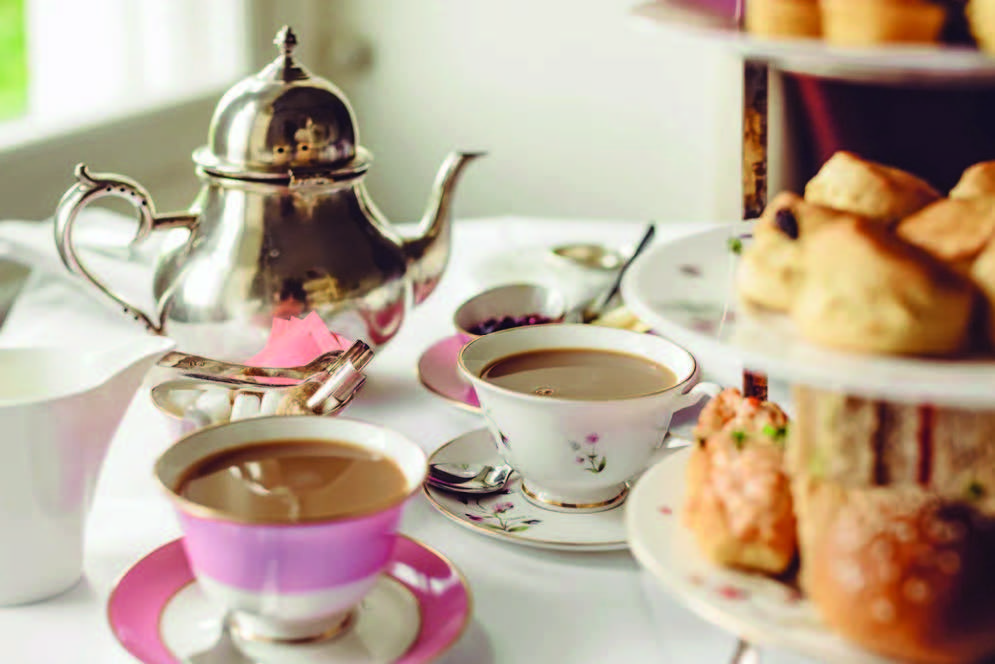
The popularity of tea in the United Kingdom has a long history, reflecting the nation’s development since the seventeenth century. It was in that Thomas Garway, the owner of a coffee house, sold the first tea in London. The drink soon became popular as an alternative to coffee, and by the year 1700, there were over coffee houses in the British capital selling the new drink.
In those days however, it was not something for anyone; the cost of a pound of tea in the year (up to 36 shillings a pound…) was almost the same as it was in 1985 (average: £1.80 a pound) but in 1700, a working man earned one shilling a week, compared to £ in 1985!
For a century and a half, tea remained an drink; many employers served a cup of it to their workers in the middle of the morning, thus inventing a lasting British institution, the “tea break”; but as a social drink outside the workplace, tea was reserved for the nobility and for the growing middle classes. Among those who had the means, it became very popular as a drink to be enjoyed in cafés and “ “.
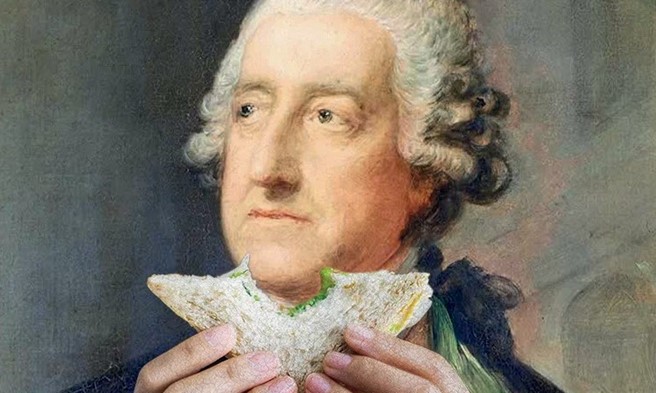
It was the 7th Duchess of Bedford who, in around 1800, started the popular fashion of “ tea”, a ceremony taking place at about four o’clock. Until then, people did not usually eat or drink anything between lunch and dinner. At approximately the same time, the Earl of Sandwich popularized a new way of eating bread — in thin slices, with something (e.g. jam or cucumbers) between them, and before long, a small meal at the end of the afternoon, involving tea and sandwiches had become part of a way of life.
As tea became much cheaper during the nineteenth century, its popularity spread right through British society, and before long, it had become Britain’s favorite drink — pro- moted by the Victorians as an economical, warming, non-alcoholic drink. In working-class households, it was served with the main meal of the day, eaten when workers returned home after a day’s labor. This meal has become known as “ tea”.
Today, tea can be drunk at any time of day. The large majority of people in Britain drink tea for breakfast: the mid-morning “tea ” is an institution in British offices and factories (though some people prefer coffee at this time of day); and for anyone working outdoors, a of tea is almost an essential part of the day’s equipment. Later in the day, “afternoon tea” is still a way of life in the south of England and among the middle classes, whereas “high tea” has remained a tradition in the north of Britain.

A CLASSIC ENGLISH “CUPPA”
To make tea. Put teabags or teaspoonfuls of tea into a warmed pot. Add boiling , and leave to brew for three or four minutes. Serve with a dash of milk and/or sugar. Tea without sugar is the best with sweet snacks (biscuits, jam sandwiches, cakes).
Some brands of tea: Ty-Phoo, Brooke Bond etc. “ ” British teas are Indian varieties, which can be drunk quite strong.
Varieties of tea: The best Indian tea is reputed to be Darjeeling tea. Assam tea is a much stronger tea. China teas are more : the most popu- lar are Keemum and Lapsang Souchong.
“ ” tea is a blend of China and Darjeeling, flavoured with oil of bergamot.
WORDS:
-beverage: drink -in the event: in reality -an understatement: the opposite of an exaggeration -owner: proprietor -shilling: 0.05 pounds (5 modern pence) -to last: to continue -a break: a pause -had the means: had enough money -labour: work -factory: industrial building -cuppa: cup of tea -brew: infuse -a dash: small amount -a brand: a trade name -a blend: mixture -flavour: taste